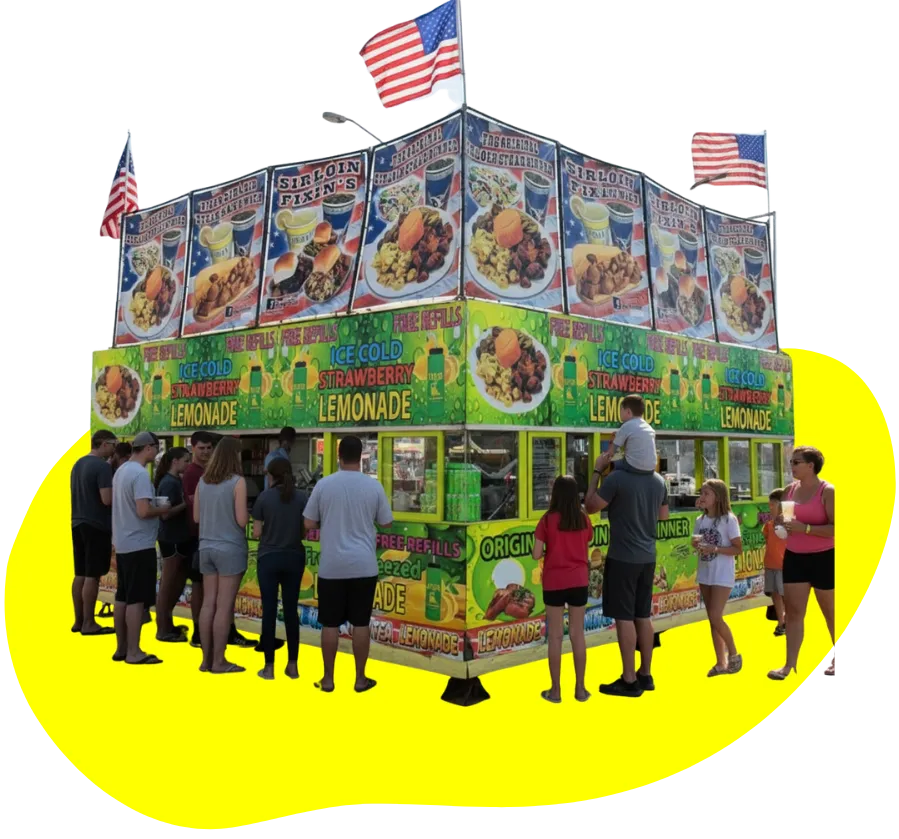
I've been running concession stands for nearly 20 years. Twelve food concepts across 5 state fairs in 9 states. I've bought a lot of equipment — some of it smart, some of it expensive lessons I'd rather you skip.
Every equipment supplier wants you to think you need more than you do. Every startup guide lists the same generic items without telling you what actually matters at a real event. This list is different. This is what I actually use, what I actually recommend to operators I coach, and what I wish someone had told me when I was starting out.
The Right Way to Build Your Concession Stand Equipment List
Before you buy anything, answer two questions: What are you selling? And where are you selling it?
Your concept drives your equipment list. A lemonade stand needs a commercial juicer and a refrigerated display. A BBQ booth needs a smoker and a warming unit. A funnel cake operation needs a deep fryer and a powder sugar station. There is no single universal equipment list — there's a framework, and then you adapt it to your concept.
Your event type matters too. A state fair booth with electricity and a permanent structure needs different equipment than a pop-up tent at a farmers market. Know your setup before you spend a dollar.
Core Equipment Every Concession Stand Needs
These items apply to virtually every concept regardless of what you're selling.
Commercial refrigeration. A reach-in or under-counter refrigerator rated for commercial use. Not a household unit — those aren't built to run continuously in a hot outdoor environment and will fail on you mid-event. Budget $400–$1,200 for a used commercial unit. This is not where you cut corners.
Food-safe prep surfaces. Stainless steel prep tables are the standard. Easy to clean, health department approved, durable. You need enough surface area to work efficiently at peak service — plan for at least one 6-foot table minimum.
Handwashing station. Required by health departments at most events. A self-contained portable hand sink with fresh water tank, waste water tank, soap, and paper towels. Non-negotiable if you're applying to state fairs or large festivals.
Generator or power management. Know your power draw before the event. Add up the wattage of every piece of equipment you're running. If the event provides power hookups, get the specs in advance. If you're running your own generator, size it at 25% above your calculated load. Running out of power mid-service is one of the worst things that can happen to your day.
Tent or booth structure. Either a permanent trailer/booth or a quality commercial canopy tent (10x10 or 10x20). Consumer-grade tents from big box stores will not survive a full fair season. Invest in a commercial-grade tent with proper stakes and weights.
POS system. Take cards. Every event, every time. Cash-only is leaving money on the table — a large percentage of customers at events don't carry cash. Square and Clover both work well for concession operations. Get a cellular data backup so you're not dependent on the event's WiFi.
Cooking Equipment — By Concept
This is where your list gets specific to your food concept. Here are the most common concession setups and what they require.
Fried food (fries, funnel cake, elephant ears). Commercial deep fryer — a quality countertop unit starts around $300 used. You'll need a fryer oil management system (strainer, disposal container), heat lamps to hold product, and adequate ventilation. Oil costs are ongoing — factor this into your pricing from day one.
Popcorn. A concession stand popcorn machine is one of the best margin items in the business — the product cost is almost nothing and the perceived value is high. A commercial popcorn machine runs $200–$600 new. Get one with a warming deck so product stays fresh and visible. The smell alone drives impulse sales.
BBQ and smoked meats. A quality smoker is the anchor of your operation. Trailer-mounted smokers give you mobility. You'll need warming equipment to hold product between batches, carving/prep tools, and a proper setup for health department compliance on temperature holding.
Beverages and lemonade. A commercial juicer if doing fresh-squeezed (it's worth it — people watch you make it and that drives sales). Refrigerated display for bottled beverages. A high-capacity dispenser if doing flavored drinks. Ice chest or commercial ice bin.
Pizza and flatbreads. A commercial countertop pizza oven or conveyor oven. Prep surface for dough work. Refrigerated storage for toppings. The equipment investment is higher but so is the ticket price.
Concession Stand Supplies — The Day-to-Day Consumables
This is the category that kills new operators who didn't plan for it. Concession stand supplies are a recurring cost, not a one-time purchase. Run out of the wrong thing mid-event and you're losing sales.
Your essential supplies list:
Packaging and serviceware. Boxes, bags, boats, trays, cups, lids, napkins, straws, forks. Buy in bulk from a restaurant supply company — never pay retail prices for these. Sysco, US Foods, and local restaurant supply distributors all sell to small operators.
Food prep supplies. Cutting boards, knives, tongs, serving utensils, portion scoops, squeeze bottles. Color-coded cutting boards if you're handling multiple proteins — it's health code best practice and prevents cross-contamination.
Cleaning supplies. Food-safe sanitizer, clean towels or disposable wipes, a mop bucket for end-of-day, trash bags in the right sizes for your booth setup. Health inspectors notice cleanliness. Your booth hygiene affects whether you get invited back.
Signage and display. A readable menu board from 10+ feet away is a sales tool, not a decoration. Clear pricing, large font, your top items prominent. Digital menu boards have come down in price and let you adjust pricing by event. A clean coroplast or aluminum static board works fine for most operators starting out.
Concession Stand Windows and Booth Setup
If you're operating out of a trailer, your concession stand windows are the face of your business. They should open fully and hold securely — nothing looks worse than a window prop that keeps falling. Awning-style windows that fold up and lock in place work best for most trailer setups.
Service windows should be positioned at a comfortable height for both staff and customers. Too high and customers can't see your menu or products. Too low and your staff is hunched over all day.
If you're operating out of a tent, your front counter setup matters. Give yourself enough depth to work behind the counter without bumping into each other during a rush. Tight setups slow service. Slow service loses sales.
What to Buy New vs Used
This is one of the most common questions I get from new operators, and the answer is nuanced.
Buy used: Refrigeration units, prep tables, shelving, generators, tents, most smallwares. Commercial equipment is built to last and a well-maintained used unit can run for years. Restaurant closures, auctions, and Facebook Marketplace are your sources.
Buy new: POS system, handwashing station, anything involving electrical components you can't inspect (elements, heating coils, thermostats). The cost of a failed piece of equipment mid-fair is always more than the savings on buying cheap.
Lease or rent first: If you're not sure about a concept, rent the specialty equipment for your first event. A commercial fryer rental for a weekend costs less than buying one for a concept that doesn't work out.
Best Selling Concession Stand Items and the Equipment They Need
The best selling concession stand items at most fairs are also the most equipment-efficient to run. Lemonade, fries, popcorn, and kettle corn consistently rank at the top because they have low food cost, high perceived value, and don't require a lot of equipment to execute well at volume.
When you're evaluating a concept, run this calculation: how many pieces of equipment do I need to produce this item at 200 orders an hour? If the answer is more than 3-4 pieces of cooking equipment, your booth gets complex fast. Complexity in a high-volume fair environment is the enemy of throughput.
How Much Does Concession Stand Equipment Cost?
Here's what real operators spend on their first season's equipment. These are not theoretical ranges — these are based on the operators I work with inside our coaching programs.
- Lean tent-based setup: $1,500–$4,000 total equipment cost. Covers a commercial canopy, folding tables, one cooking appliance, basic refrigeration, handwashing station, and smallwares.
- Used trailer setup: $6,000–$18,000 including the trailer. Most operators in this range are buying a used trailer ($4,000–$12,000) plus equipping it with used commercial cooking equipment.
- New custom trailer: $25,000–$60,000+. A professionally built trailer with all new equipment, custom wrap, and turnkey setup. This is where you land after you've proven your concept — not where you start.
The single biggest way to save on equipment is buying used from operators who are exiting the business. Facebook Marketplace, restaurant auctions, and vendor Facebook groups are where the best deals show up. For a full breakdown of all startup costs beyond equipment, read our concession stand startup costs guide.
How to Set Up a Concession Stand at an Event
Your equipment list only matters if it's set up efficiently when the event starts. Here's the setup process I use across all 12 of my concepts:
Day before (if allowed): Position your trailer or tent structure. Run your power — verify outlets, test your generator, confirm hookups. Stage your heavy equipment in final position. Load refrigeration and turn it on overnight so product is cold by service time.
Morning of: Set up your service line in order of workflow — prep station, cooking station, plating station, service window. Everything your staff touches should flow left to right (or right to left — pick a direction and be consistent). Place your POS system where customers naturally approach. Put your menu board where it's visible from at least 15 feet out.
Critical setup mistakes to avoid: Don't block your own sight lines to customer traffic. Don't put your generator where exhaust blows toward your food or customers. Don't position your trash away from your service area — your staff needs to reach it without leaving the line. And always do a test run of every piece of equipment before the event opens. Finding out your fryer thermostat is broken at 10 AM opening is a disaster you can prevent the night before.
The Equipment Mistakes I See New Operators Make
After coaching operators across the country, the same mistakes come up over and over.
Over-buying before validating the concept. Don't spend $15,000 on a fully outfitted trailer before you've done a single event. Start lean, test your concept, then invest in permanent equipment when you know the concept works.
Under-buying refrigeration. New operators consistently buy refrigeration that's too small. You'll add products, add ingredients, take on more volume than you expected — and run out of cold storage. Buy slightly more refrigeration capacity than you think you need.
Ignoring power requirements. I've seen operators show up to a state fair, plug in their equipment, and immediately trip the circuit because they didn't calculate their power draw. Get your wattage numbers before the event, not during.
Cheap serving supplies. Flimsy containers that fall apart, bags that won't stay closed, napkins that disintegrate — these are small costs that have a real impact on customer experience. Pay a little more for quality packaging. It reflects on your brand.
The full equipment checklist, startup cost breakdown, and concept-specific gear guides are inside The Concession Collective. Join free here — Module 1 covers the complete setup process from choosing your concept through your first event.
For a full breakdown of what you'll spend, read our concession stand startup costs guide. And if you want to model your menu prices against your equipment investment, use our free concession stand pricing calculator.